Freight forwarder in Toronto, from the water to your door.
Toronto is an inland market. Nothing arrives here by ship, so every ocean import lands somewhere else first and finishes on rail or a truck. Freight forwarding companies in Toronto earn their fee on that second half, not the first.
The parts that decide the outcome.
Toronto has no port, so the water leg ends elsewhere
Containers for the GTA arrive through Vancouver, Prince Rupert, Montreal or Halifax and finish by rail or highway. Which one suits depends on where the cargo starts, what the rail ramp is doing that week, and how much free time the carrier allows at destination. A quote that names only the ocean rate has priced half the move.
The rail ramps that actually serve the GTA
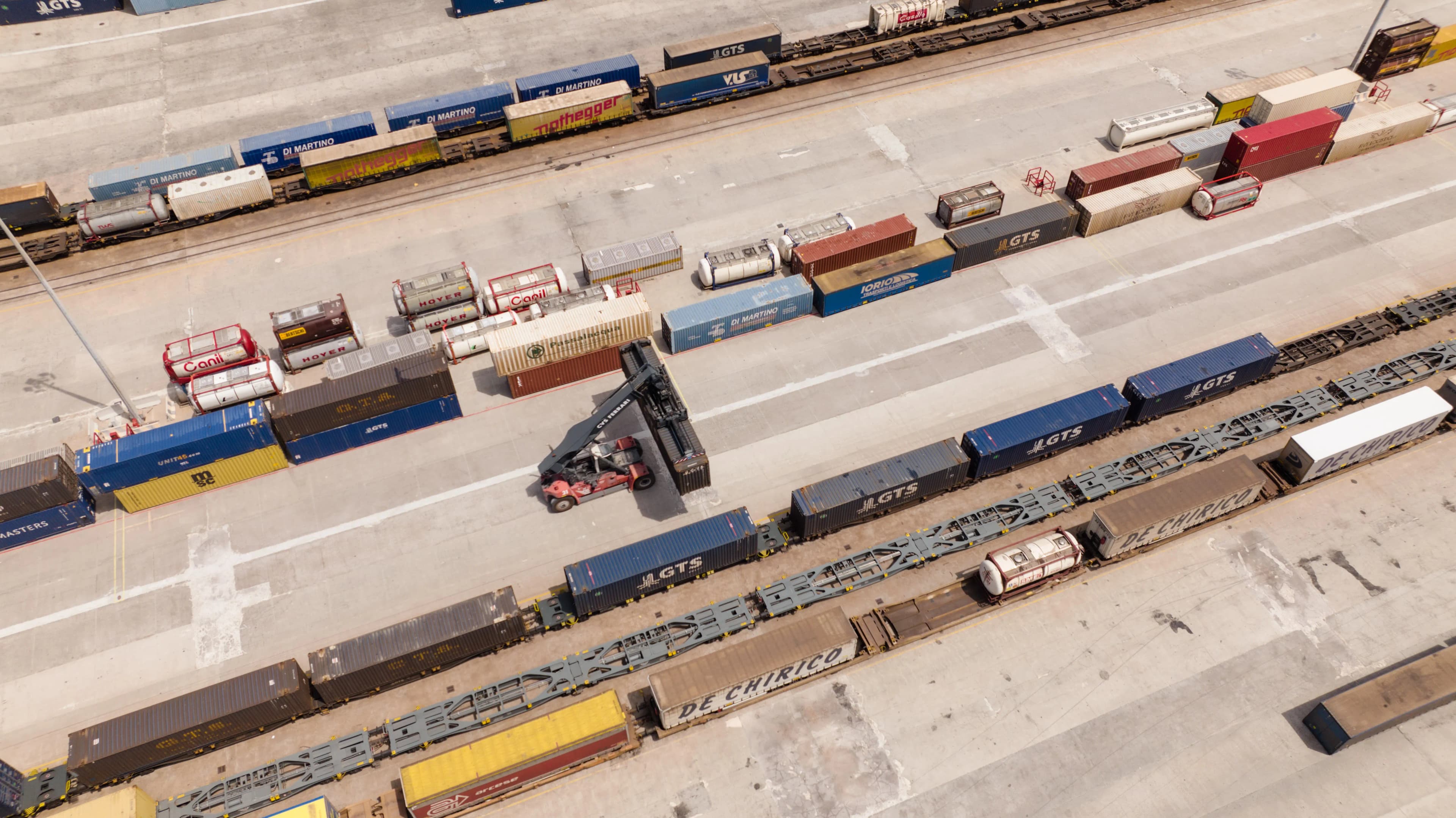
CN Brampton and CPKC Vaughan are where most Toronto-bound containers are released. Both sit in the same corridor as the warehouses they feed, which is why a box can clear customs and still take days to reach a door twenty minutes away. Booking the drayage before the container lands is what keeps that gap short.
Pearson, and the step that follows it
Air freight into Toronto arrives at Pearson and sits in a bonded warehouse until it is released. The flight is rarely the delay. Whether the paperwork reaches the right desk before the aircraft does is what decides between same-day release and waiting for tomorrow.
Free time runs out at the port, not in Toronto
Demurrage starts at the terminal where the box landed and detention starts when it leaves. Neither clock cares that the cargo is bound for Ontario. On a Vancouver routing the rail leg can eat several days of free time before anyone in Toronto has seen the container, so the days have to be counted from the arrival notice rather than from delivery.
LCL means a deconsolidation stop
Less than container load freight is stripped at a warehouse before it reaches you, and that stop is where most LCL delay lives. A direct consolidation into the GTA moves faster than one broken down at the coast and reloaded. It is worth asking which one you are being quoted.
Insurance, when the value justifies it
Carrier liability on an ocean bill of lading is limited and bears no relation to what the goods are worth. Cargo insurance covers commercial value plus freight, and we quote it alongside the rate rather than raise it after a claim.
The delivery slot matters more than the drive
A container released on Friday afternoon does not reach a Brampton or Mississauga door on Friday afternoon. Receiving bays run on appointments, and the busy ones book days out. The drive is forty minutes. The wait for a slot is what actually sets the delivery date, which is why we book the appointment when the vessel berths rather than when the box is released.
Transloading beats paying for the ocean box to sit
A forty foot ocean container held in the GTA while a warehouse works through it earns detention every day. Stripping it into domestic fifty-three foot trailers at a transload warehouse hands the box back quickly and usually costs less than the days saved. It is worth pricing whenever the receiving end is slow or the freight is going to more than one address.
Toronto imports go wrong after they land, not before
Most of what a Toronto importer worries about happens on the far side of the ocean, and most of what actually costs money happens on this side. The sailing is scheduled, tracked and largely out of anyone’s hands once the vessel leaves. The inland leg is neither scheduled nor tracked unless somebody is doing it on purpose.
A container discharged in Vancouver has to be released by the terminal, loaded to rail, moved across the country, released again at the ramp, and trucked to a door. Each handover is a queue, and each queue is where a shipment sits while free time runs down. The forwarder who booked the sailing often has no presence at any of those points, which is how a customer ends up chasing four companies for one box.
That is the case for working with a Toronto freight forwarder rather than an agent at the coast. We are in North York. The drayage carrier, the ramp appointment and the delivery window are arranged from the same desk that booked the ocean leg, so when the ramp slips the delivery moves with it instead of failing.
Air into Pearson, and when it is worth the money
Air is roughly five to ten times the cost of ocean per kilo, so it earns its price in three situations and rarely otherwise: the goods are light and valuable, a production line is down, or a retail commitment is about to be missed. Outside those, it is usually an expensive way to buy back time that better planning would have given for nothing.
When it is the right answer, the flight is the easy part. Freight arriving at Pearson goes into a bonded warehouse and stays there until it is released, and the release depends on documents that should have been sent while the aircraft was still in the air. We work the paperwork ahead of arrival so the shipment is not waiting on us.
Part-charter and next-flight-out options exist and cost what you would expect. We will tell you plainly when a two-day saving is not worth what it is being quoted at.
LCL into the GTA and where the days disappear
Less than container load looks simple on a quote and is the most variable product in forwarding. Your pallets share a box with other shippers, and the box does not move until it is full. Then it is stripped at a deconsolidation warehouse before anything reaches you.
The difference between a good LCL service and a poor one into Toronto is where that stripping happens and how often the consolidation sails. A weekly direct consolidation into the GTA beats a cheaper service that breaks down at the coast and reloads, even when the ocean rate looks worse, because the reload adds days nobody quoted.
If the volume is above roughly fifteen cubic metres it is worth pricing a full container alongside the LCL rate. The break-even moves with the market and sometimes lands lower than people expect.
The charges that arrive after the freight invoice
The ocean rate is the number people compare and it is rarely the number they end up paying. Between the vessel and the door sit terminal handling at the discharge port, the rail intermodal charge, chassis, drayage, fuel, any storage at the ramp, and waiting time at delivery. None of that is hidden. It is simply left off quotes that are built to look cheap.
The two that catch Toronto importers hardest are storage at the rail ramp and waiting time at the door. Both are avoidable and both are caused by the same thing: nobody booked the next step until the previous one finished. A box that is released with no appointment waiting for it starts accruing charges immediately, and a truck that arrives at a bay with no slot sits there on the clock.
We quote the landed number, with the variable items named and the assumption behind each one written down. If a charge moves, you get told why. That is less comfortable than a low headline rate and considerably less expensive.
Book backwards from the date it has to be on the floor
Most import problems are scheduling problems wearing a costume. The supplier is asked when they can ship, the forwarder is asked what sails next, and the date the goods are actually needed in Ontario is the one number nobody worked from.
Start at the other end. Take the date it has to be on the floor, subtract the delivery appointment, the drayage, the rail leg, the clearance, the ocean transit and the cut-off at origin, and you get the date the supplier has to be ready. It is usually two to three weeks earlier than anyone assumed, and finding that out in planning costs nothing.
Where the sum does not work, there are only three levers: pay for air on part of it, split the shipment so the urgent portion flies and the rest sails, or move the deadline. We will lay out what each one costs and let you pick. What we will not do is quietly book the cheap option and let the date slip.
Import corridors into Toronto
Indicative door-to-door ranges for the routings we quote. They move with carrier schedules, rail congestion and season, so treat them as a shape rather than a promise. Ask for live transit on the lane you are actually booking.
| Lane | Transit | What decides it |
|---|---|---|
| Shanghai to Toronto via Vancouver | 28 to 35 days | Ocean to the west coast, rail to the CN Brampton ramp, then drayage. |
| Yantian to Toronto via Vancouver | 28 to 36 days | Same shape. Rail congestion is the variable, not the sailing. |
| Shanghai to Toronto via Montreal | 35 to 45 days | All water through the canal, then highway. Slower and steadier. |
| Rotterdam to Toronto via Montreal | 18 to 26 days | The short answer from northern Europe. |
| Halifax to Toronto | 3 to 6 days | The inland leg on its own, rail or highway. |
| Asia to Toronto by air | 5 to 9 days | Door to door through Pearson, clearance included. |
| Busan to Toronto via Vancouver | 26 to 34 days | Often the quickest transpacific option into the GTA. |
| Felixstowe to Toronto via Montreal | 19 to 27 days | UK exports take the same routing as the continent. |
Freight forwarding in Toronto, asked and answered.
- Which port should my Toronto container come through?
- From Asia the choice is usually a west coast landing at Vancouver or Prince Rupert with rail to the GTA, or an all-water routing through the canal to Montreal. West coast is normally faster on paper and more exposed to rail congestion. All water is slower and steadier. From northern Europe, Montreal is the short answer. When timing is tight we price both so you can see the trade rather than take our word for it.
- Do you handle the customs entry as well as the freight?
- We coordinate it end to end and a licensed customs broker files the entry. You get one file and one point of contact instead of a forwarder and a broker each holding half the paperwork.
- How is a Toronto freight forwarder different from one at the port?
- A forwarder sitting at the coast is close to the water leg and far from your delivery. One working out of the GTA is the other way round. What matters is who controls the inland leg, because that is where Toronto imports actually stall. We are in North York, and the drayage, the ramp and the final delivery are ours.
- Can you collect from my supplier rather than the port of loading?
- Yes. Factory collection, export clearance at origin and the main leg all sit on the same file. It is usually worth doing when the supplier is inland from the port, because that first truck is the leg most often left out of a quote and most often invoiced afterwards.
- What do you need from me to quote?
- Origin and destination postal codes, the Incoterm, the commodity, and either the container size or the pieces with dimensions and weights. If the Incoterm is not settled yet, tell us what the supplier has offered and we will tell you what it commits you to.
- Do you arrange cargo insurance?
- Yes, when you want it. It is quoted on commercial value plus freight, alongside the rate rather than after something has gone wrong.
- What happens if my container is held for examination?
- Canada Border Services can hold a container at the port of discharge or send it to a facility for a closer look. You pay the examination and the storage while it waits, and nobody can shorten the queue. What we can do is spot it early from the notice, keep the appointment and the drayage from burning money against a box that is not moving, and tell you honestly what the new date looks like.
- Can you hold the freight if my warehouse is full?
- Yes. Short-term storage in the GTA is straightforward to arrange and it is normally cheaper than leaving the goods in the container. We will say which of the two is actually cheaper on your numbers rather than defaulting to the one that suits us.
One desk, every mode.
For everything we run out of Toronto — every mode, the terminals and the border crossings behind them — see freight services in Toronto. For how this works nationally rather than in Toronto specifically, see freight forwarding across Canada.
Have a shipment? Get rates in 10 min.
Tell us the origin, destination and mode. A Qeep specialist replies within 10 minutes with live capacity, lane price, and a transit window you can actually plan around.