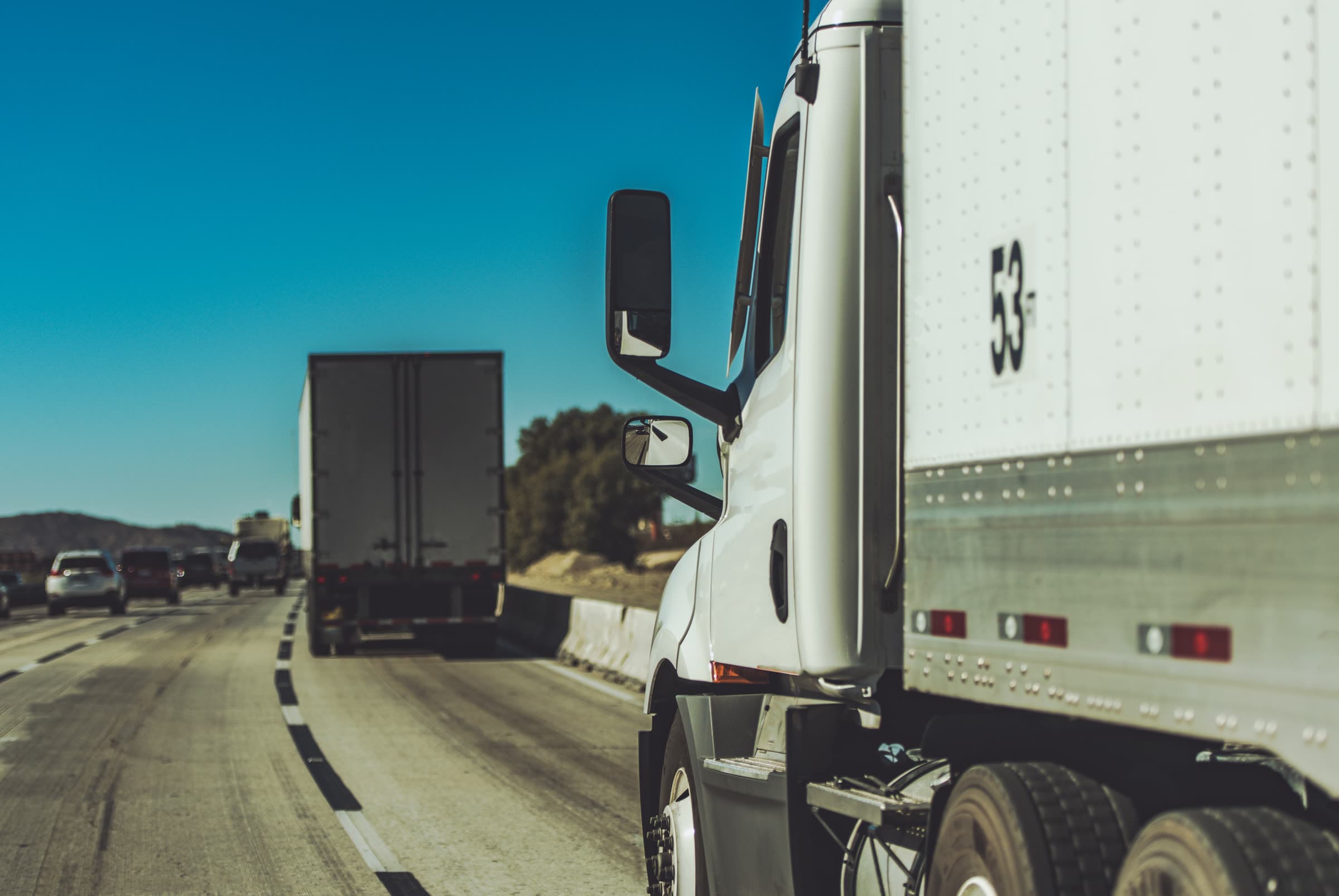
Truckload in Toronto, covered properly.
Toronto has the deepest carrier pool in Canada, which changes what full truckload procurement looks like. On established lanes the question is rarely whether a truck exists — it is which carrier, at what price, and whether they are actually fit to run your freight. That is where the work is.
The parts that decide the outcome.
Every carrier checked before it moves anything
Ontario carriers must hold a CVOR, and we verify standing alongside insurance certificates and safety rating. Qeep holds FMCSA broker authority with a BMC-84 surety bond for US-bound work.
The lanes that run every day
Toronto to Montréal, Toronto to Chicago and Detroit via Windsor, Toronto to the New York and New England corridor via Fort Erie, and Toronto west across the Prairies. Regular volume on a lane means better pricing than a one-off spot move.
The right equipment, not the available equipment
Dry van, reefer, flatbed and step-deck are different markets with different carrier bases. Putting freight on whatever is nearest is how loads arrive damaged or late.
Border routing decided on the day
Windsor–Detroit, Fort Erie–Buffalo and Sarnia–Port Huron are all within reach of the GTA. When one backs up, another is usually moving — but only if somebody is watching.
Pickups across the whole GTA, not just downtown
Most truckload freight out of "Toronto" actually loads in Mississauga, Brampton, Vaughan, Etobicoke or Scarborough, and the difference matters for timing. A Brampton pickup at 14:00 and a Scarborough pickup at 14:00 are not the same load, because one of them has to cross the city before the driver clock starts working against the border. We plan the pickup window around where the freight actually sits.
The 401 and 407 decide your departure time
Highway 401 through the GTA is one of the busiest freight corridors in North America and it does not move at rush hour. A truck that leaves a Mississauga dock at 15:30 loses an hour it will not get back. Where the schedule is tight we will pay for the 407 rather than lose the driver hours, and we will say so on the quote rather than quietly absorbing it.
Ontario weight limits, before the load is built
Ontario allows higher gross weights than most US states under its own configurations, which means a load that is legal leaving the GTA can be overweight the moment it crosses. On any cross-border truckload we check the axle configuration against the destination jurisdiction before the trailer is loaded, because redistributing weight at the border is a bad day and re-loading is a worse one.
Detention, drop trailers and the charges that actually appear
Free time is normally two hours at each end. After that detention runs hourly, and the most common cause on GTA freight is a shipper that books a 08:00 loading appointment and has the freight ready at 11:00. Where your volume justifies it, a drop trailer removes the problem entirely: the trailer sits at your dock, you load on your own schedule, and the tractor collects it.
What a Toronto full truckload quote is actually built from
A full truckload rate out of Toronto is not one number, it is four. The linehaul covers the tractor, the trailer and the driver hours for the distance. The fuel surcharge sits on top of it and moves with diesel, which is why a rate quoted in March and a rate quoted in October for the same lane can differ without anybody changing their margin. Accessorials cover anything the load needs beyond a dock-to-dock move: a second stop, a driver-assist unload, a liftgate, a tarp, detention past free time. Cross-border adds the customs entry and any bond cost. When we quote we separate those lines rather than blending them, because a blended number tells you nothing about which part you can change.
The single biggest variable on a GTA truckload is not distance, it is direction relative to the market. Freight leaving Toronto for the US Midwest competes with a heavy outbound flow, so capacity is generally available and priced accordingly. Freight coming back into Ontario from a thin market like the Maritimes or the US Mountain states is a different problem, because the carrier has to price the empty risk into the load. A round-trip that looks symmetrical on a map is rarely symmetrical on a rate sheet. If your volume gives us a backhaul to pair with it, that is where the real saving sits, and it is worth telling us about freight you move in both directions.
Spot and contract pricing answer different questions. A spot rate is what capacity costs today for this specific load, and on a soft market it can beat a contract rate comfortably. A contract rate is a commitment to a price across a period, which costs more when the market is loose and protects you when it tightens. Most Toronto shippers we work with run a mix: contract on the lanes they cannot afford to have fail, spot on everything else. We will tell you honestly which of your lanes justify a committed rate and which ones do not, because putting every lane under contract in a soft market is an expensive way to feel organised.
The 53-foot dry van, and when it is the wrong trailer for your freight
The standard North American dry van is 53 feet long, roughly 8 feet 6 inches wide inside, and takes 26 skids on the floor without double-stacking. In practice you run out of one of two things first: weight or cube. A legal payload in a dry van is broadly in the 44,000 to 45,000 pound range depending on the tractor, the fuel load and the axle configuration, and freight that hits that ceiling before the trailer is full is a weight load. Freight that fills the deck at half that weight is a cube load. Knowing which one you have changes the quote, because a cube load can sometimes take a partial and a weight load almost never can.
Ontario complicates the weight side more than most jurisdictions. The province permits configurations and gross weights that several US states do not, so a truckload that is entirely legal on Highway 401 can be over the limit the moment it crosses at Windsor or Fort Erie. This catches domestic shippers the first time they send the same load south. On any cross-border truckload we check the payload against the destination state rules before the trailer is built, because moving pallets around in a yard next to the border is expensive, slow and completely avoidable with a five-minute check the day before.
There are loads a dry van simply cannot take, and the honest answer is to say so rather than force it. Freight taller than roughly 8 feet 6 inches, wider than the door opening, or that has to be loaded from the side or the top belongs on a flatbed or a step-deck. Anything with a temperature requirement belongs in a reefer, and running it in a dry van with a blanket wrap is a claim waiting to happen. Small shipments under about six skids usually price better as LTL or as a partial than as a dedicated truck. Part of the job is telling you when the trailer you asked for is not the trailer the freight needs.
Tracking, check calls and what you actually see while the load runs
Visibility on a truckload is a chain of three things: the electronic logging device in the tractor, the carrier dispatcher, and us. ELDs have been mandatory in both Canada and the United States for several years, so almost every compliant carrier can produce a position. What varies enormously is whether that position reaches you. A carrier with a modern telematics platform can share a tracking link directly. A smaller owner-operator may not, and on those loads the position comes from a dispatcher call. Neither is wrong, but they are different service levels and we say which one you are getting rather than implying live tracking on every load.
Check calls exist to catch problems early, not to reassure anybody. The useful ones are at pickup confirmation, at end of day one, and before the delivery appointment. What matters is what happens when a check call comes back wrong: a truck sitting still in Ohio at two in the afternoon is a conversation to have at two, not at eight the next morning when the receiver calls you. Our standing rule is that you hear about a problem from us before you hear about it from your customer, because the difference between a managed delay and an unexplained one is entirely about who called first.
Appointments are where most truckload delays are actually created. Large receivers in the GTA and across the US Midwest run scheduled dock windows, and a truck that misses its window frequently waits until the next available slot, which can be the following day. That is not a transit failure, it is a scheduling failure, and it is preventable by booking the appointment against a realistic arrival rather than an optimistic one. Where a receiver only offers a narrow window, we would rather build the schedule with a night of slack than promise an arrival that depends on the 401 behaving.
Cargo insurance, carrier liability and what happens if a load is damaged
Carrier cargo liability and cargo insurance are not the same thing, and the difference matters when something goes wrong. Liability is what the carrier is legally responsible for under the bill of lading and the applicable statutory regime, and it is often capped per pound rather than at the value of your goods. Insurance is the policy that responds to that liability. A load of electronics worth two hundred thousand dollars moving under a standard bill of lading is not automatically covered for two hundred thousand dollars. If the value of your freight is above the ordinary range, declare it at booking so the coverage can be arranged deliberately.
Every carrier we tender freight to is checked before it moves anything, and the check covers operating authority, safety rating, and current insurance certificates confirmed with the insurer rather than accepted as a PDF from the carrier. Certificates expire, and a certificate that was valid when a carrier was onboarded proves nothing about today. Ontario carriers also hold a CVOR record, which is a public safety history, and it is worth looking at rather than assuming. Double-brokering, where a carrier quietly re-tenders your load to someone unvetted, is the main way this control fails, so it is written into the terms we tender under.
If freight does arrive damaged, the evidence is gathered at the door and nowhere else. Note the damage on the delivery receipt before signing, photograph the freight in the trailer if you can, and keep the packaging. A clean signed receipt makes a later claim very difficult to win regardless of what actually happened. Concealed damage discovered after the driver has left has to be reported promptly to stay valid. We will file the claim and chase it through to settlement, but the file is only as strong as what was captured in the first ten minutes at the dock.
Full truckload lanes we run from Toronto every week
These are the corridors that carry most of our outbound GTA truckload volume. Transit is driving time for a single driver under normal conditions, before any border wait. Rates on all of them move with the season and with the balance of freight in the return direction.
| Lane | Transit | What decides it |
|---|---|---|
| Toronto to Detroit | Same day | Windsor or Sarnia crossing, chosen on the day against wait times |
| Toronto to Chicago | 1 day | Heavy outbound flow keeps capacity available and pricing competitive |
| Toronto to Cleveland and Columbus | 1 day | Fort Erie or Sarnia depending on the destination county |
| Toronto to New Jersey and New York metro | 1 to 2 days | Fort Erie or Lewiston, delivery appointments are the constraint |
| Toronto to Montreal | Same day | Domestic, no border, backhaul availability sets the price |
| Toronto to Atlanta | 2 to 3 days | Team drivers available where the date cannot move |
| Toronto to Dallas and Houston | 3 days | Long haul, backhaul out of Texas is the main rate driver |
| Toronto to Winnipeg and Calgary | 2 to 4 days | Weather is the seasonal variable, not capacity |
Full truckload in Toronto, asked and answered.
- How quickly can you cover a truckload out of Toronto?
- On standard dry van and reefer lanes in the GTA, same-day and next-day is usually achievable because carrier density here is high. Flatbed with tarping, oversize, or anything needing permits takes longer. Any specific load depends on live capacity that day, so we would rather check and tell you than promise a blanket turnaround.
- How do you choose which carrier runs my freight?
- Insurance in force and adequate for the commodity value, CVOR standing for Ontario operations, safety rating, and a genuine track record on that lane and that equipment type. Price matters, but a cheap carrier who damages a load or misses a delivery window costs more than the saving. Qeep carries FMCSA broker authority with a BMC-84 bond for cross-border work.
- What is the difference between working with you and going direct to a carrier?
- A carrier can offer you their trucks. As a broker we can put your freight on the right equipment from a vetted network of over 25,000 carriers, which matters most when your normal carrier is full, your lane is unusual, or you need flatbed one week and reefer the next. If you have steady volume on one lane and a carrier who serves it well, going direct can be perfectly sensible — we will say so.
- What do you need from me to quote a truckload out of Toronto?
- Pickup and delivery postal codes, pallet or piece count, total weight, commodity, whether it is stackable, and the pickup date with any appointment window at the far end. For cross-border, add the value and country of origin so the entry can be prepared. That is enough for a real number rather than a range. If the freight is oversized or needs a permit, dimensions matter more than weight.
- Can you pick up the same day in Mississauga or Brampton?
- Often, yes, particularly for standard dry van in the Peel industrial belt where carrier density is highest. Call rather than email if it is same day, because same-day capacity is a phone problem. Expect a same-day tender to price above the same lane booked two or three days out, since it is covered against whatever equipment is left rather than against planned capacity.
- Does capacity out of Toronto change through the year?
- Yes, and predictably enough to plan around. Ontario produce season pulls reefers out of general freight, and the Q4 retail build pulls dry vans, so both tighten the market and push rates up. January and February are usually the softest. If your volume is seasonal, telling us the shape of your year lets us hold capacity rather than bid for it at the worst moment.
- Do you cover freight that has already fallen through with another carrier?
- Yes, and it is a fair amount of what we do. A truck that no-shows leaves you with a shipper waiting and a receiver expecting, so what matters is honesty about what is actually available in the next few hours rather than an optimistic promise. We will tell you plainly if the realistic answer is tomorrow morning, because a second failed cover is worse than a rescheduled delivery.
One desk, every mode.
For everything we run out of Toronto — every mode, the terminals and the border crossings behind them — see freight services in Toronto. For how this works nationally rather than in Toronto specifically, see full truckload across Canada.
Have a shipment? Get rates in 10 min.
Tell us the origin, destination and mode. A Qeep specialist replies within 10 minutes with live capacity, lane price, and a transit window you can actually plan around.