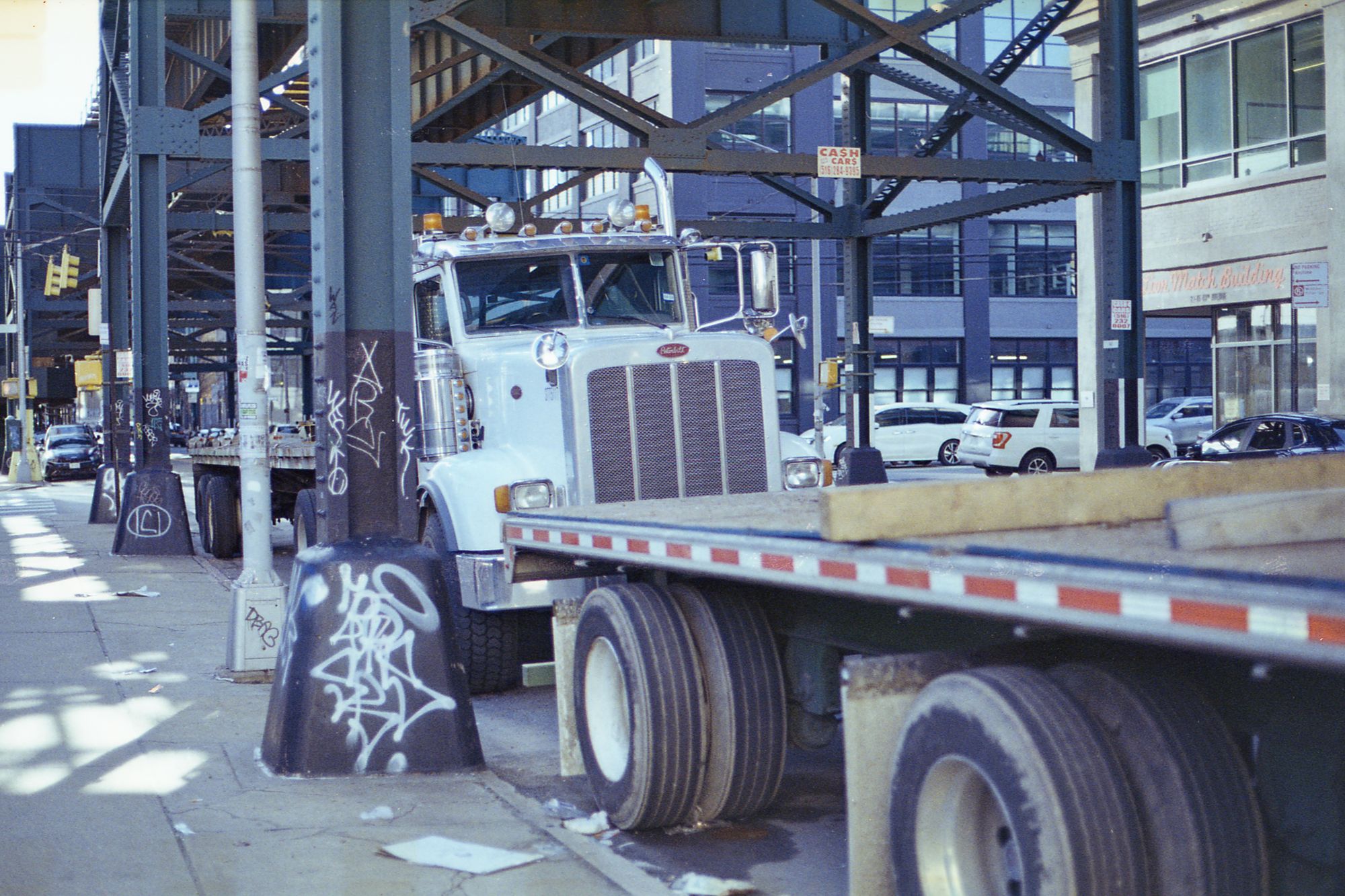
Heavy-lift, breakbulk and out-of-gauge freight, engineered end to end. Route surveys, lift plans, super-load permits, escorts and multimodal staging — one project manager, from feasibility study to final set-in-place.
The discipline for freight where a wrong assumption costs six figures — and the plan matters as much as the truck.
Project logisticsis the engineered movement of cargo that can’t be handled by a normal booking — transformers, turbines, pressure vessels, presses, pre-fabricated modules, mining and energy equipment, and sometimes entire production lines. These loads are defined by their constraints: hundreds of tons of weight, dimensions that exceed every legal limit, fragile centres of gravity, and destinations that may not have a road, a crane or a foundation ready. The freight is only half the job. The other half is the plan.
A project move starts with a feasibility study — can it even go, and what does it cost — then layers in a route survey, lift and rigging engineering, permitting across every jurisdiction on the route, escort coordination, and the multimodal choreography of road, rail, ocean and barge hand-offs. Qeep wraps all of it under one project manager and one file, so the transformer that rails to a port, transfers to a heavy-lift vessel and finishes on a self-propelled modular transporter never falls through the gap between three carriers.
Heavy-haul and multi-axle equipment is matched to the cargo’s weight, dimensions and centre of gravity — then permitted and escorted state by state.
When do you need a project-logistics team?
Three signals. Scale: the cargo exceeds standard oversize limits — over ~120,000 lb gross, or dimensions that trigger super-load status and engineering review. Complexity: the move needs more than a truck — a crane plan, a barge leg, a transload, a foundation set. Stakes: the equipment is one-of-a-kind, long-lead and mission-critical, so the cost of a delay or a damaged unit dwarfs the freight bill. If any apply, it’s a project, and it’s engineered — not quoted off a lane rate.
Breakbulk, OOG and heavy-lift — the three families
Out-of-gauge (OOG) cargo overhangs a flat-rack or open-top but can still be carried on modified container equipment. Breakbulkcan’t be containerized at all and is handled piece-by-piece on heavy-lift vessels and open decks. Heavy-liftis defined by weight rather than shape — the six-figure-pound loads that need hydraulic multi-axle trailers, SPMTs and engineered picks. Most real projects involve all three at different legs, which is exactly why they’re planned as one continuous, engineered chain rather than a series of disconnected bookings.
Interactive · Cargo configurator
Dial in your dimensions. See the equipment.
Enter the length, width, height and weight of your cargo — we’ll flag what crosses the legal envelope and recommend the trailer, permit tier and escorts. A planning estimate; the real move starts with a survey.
40 ft
53′ legal
120 in ⚠
102″ legal
132 in
162″ (13′6″) legal
72,000 lb
80,000 lb legal
A planning estimate only. Every project move is verified against state-by-state permit rules, bridge clearances and a formal route survey before a date is promised.
Recommended equipment
RGN (Removable Gooseneck)
Heavy or very tall cargo that drives/rolls onto a ground-level well — the heavy-haul workhorse.
Multi-axle hydraulic trailers and SPMTs for transformers, generators, presses and vessels up to 500+ tons, with axle-load and ground-pressure calculations on every move.
Up to 500+ tons · 2–24+ axle lines
Won’t fit a box
Breakbulk & OOG
Flat-rack, open-top, step-deck, double-drop and Schnabel-type solutions for over-width, over-height and over-length cargo that can’t be containerized.
Over-dimensional · piece-by-piece
Plan before you move
Route Survey & Engineering
Bridge ratings, clearance checks, turn-radii and pinch-point analysis by GIS, drone and physical drive-through — producing the approved routing every permit references.
GIS + drone + field survey
Set, not just delivered
Lift & Rigging Plans
Engineered lift plans specifying crane tonnage, ground-bearing pressure, pick sequence and jacking-and-skidding for heavy set-in-place at the receiving site.
Cranes · gantries · SPMT · jack & slide
Legal in every jurisdiction
Super-Load Permitting
Oversize, overweight and super-load permits filed across all 48 contiguous states and Canadian provinces, with pilot car, height-pole and police escort coordination.
48 states + CA provinces
One chain of custody
Multimodal Coordination
Road, rail, ocean heavy-lift vessel and barge legs engineered as one continuous move, with transload points and staging yards managed under a single file.
Road · rail · ocean · barge
Delivered, positioned, signed off
The survey, the permits, the crane. One desk. One project manager.
From feasibility study to final set-in-place, your project rides one file and one point of contact — not a relay of carriers hoping the next leg works out.
The project lifecycle
From feasibility to foundation, in five engineered steps.
01
Feasibility & engineering
We review drawings, weights and centres of gravity, then model equipment options, lift requirements and a draft budget before anything is committed.
02
Route survey & permits
Full route verification — bridges, clearances, turns — followed by super-load permits filed in every state and province on the approved routing.
03
Staging & multimodal hand-offs
Cargo is staged, transloaded and sequenced across road, rail, ocean and barge legs, each hand-off coordinated under one Qeep file.
04
Heavy-haul transit
Escorted movement on permitted hours with GPS tracking, securement re-checks and a project manager on call through every mile.
05
Lift & set-in-place
Engineered crane or SPMT pick at destination sets the equipment exactly on its foundation — delivered, positioned and signed off.
Project logistics is the engineered, end-to-end movement of cargo that’s too large, too heavy or too complex for a standard freight booking — capital equipment, plant relocations, transformers, pressure vessels, turbines, modules and entire production lines. It bundles feasibility studies, route surveys, lift and rigging engineering, permits, escorts, multimodal coordination (road, rail, barge, ocean) and a single project manager who owns the move from first drawing to final set-in-place.
What is the difference between breakbulk and out-of-gauge cargo?
Out-of-gauge (OOG) cargo exceeds the dimensions of a standard container or trailer but can still ride on flat-racks or open-top equipment — it’s over-width, over-height or over-length. Breakbulk is cargo that can’t be containerized at all and is loaded piece-by-piece — turbines, generators, vessels, structural steel. Both fall under project logistics; the difference drives the equipment, the lift plan and the rate.
What is a route survey and why does it matter?
Before a super-load moves, we physically (or via GIS and drone) verify the entire route: bridge load ratings, overpass and tunnel clearances, turn radii, road weight limits, utility-line heights and pinch points. The survey produces an approved routing that every state or province permit references. Skipping it is how loads end up wedged under a bridge — so on engineered moves it is the first deliverable, not an afterthought.
How far in advance should I book a project move?
It depends on the dimensions. A single over-dimensional load on standard heavy-haul can move in 1–2 weeks. A multi-axle super-load needing engineering review, route surveys and police escorts typically needs 4–12 weeks of lead time, and a multimodal plant relocation can run several months of planning. The sooner we see drawings and weights, the more options — and the lower the cost.
Do you handle the lifting and rigging at both ends?
Yes. We coordinate cranes, gantries, jacking-and-skidding systems, self-propelled modular transporters (SPMTs) and rigging crews at origin and destination. For heavy set-in-place work our engineers produce the lift plan, specify the crane tonnage and ground-bearing pressure, and sequence the pick so the iron is set exactly where it needs to be — not just delivered to the gate.
Can a project move combine road, rail, ocean and barge?
That’s the norm for large project cargo. A transformer might rail to a port, transfer to a heavy-lift vessel, discharge to a barge, then ride an SPMT the final miles to the substation. We engineer the multimodal hand-offs, transload points and staging yards as one continuous chain of custody under a single Qeep file, so no leg falls through the cracks between carriers.
What information do you need to quote a project move?
The more engineering detail you send up front, the tighter the number and the fewer surprises later. Ideally we want a general arrangement drawing, the gross weight of each piece, transport dimensions, the marked centre of gravity, the designated lifting and jacking points, and a site plan showing access, ground conditions and the final set position. Where drawings do not exist we can work from weights, dimensions and photographs, but the quote carries more contingency. Tell us the required on-site date as well as the ready date, because on an engineered move the schedule usually drives the method rather than the other way around.
What is a lift plan and who signs off on it?
A lift plan is the engineered document that governs how a piece is picked, moved and set. It specifies the crane or gantry, the configuration and counterweight, rigging hardware with working load limits, sling angles, ground bearing pressure and the crane pad required to spread it, exclusion zones and the sequence of the pick. On anything significant it is prepared or reviewed by a professional engineer and signed before mobilisation. We coordinate the plan with the lift contractor and the site so that ground preparation, crane access and the delivery window are all sized against the same document.
How does project cargo get from the ocean port to site?
Port selection is part of the engineering, not an afterthought. Vancouver and Prince Rupert serve western and prairie projects, Montreal and Halifax serve the east, and each has different heavy-lift crane capacity, laydown area and rail connection. From the terminal the piece moves by heavy haul road, by rail on a depressed-centre or Schnabel car where the dimensions allow, or by barge where the site is on water. Where the terminal cannot handle the weight we may route to a different port entirely, because saving a thousand kilometres of ocean can cost far more in shore crane and permits.
What is roll-on roll-off shipping and when is it better than breakbulk?
Roll-on roll-off vessels are loaded through a stern or side ramp, so anything with wheels or tracks, or anything that can be set on a roll trailer, is driven aboard rather than lifted. That removes the shore crane from the equation, which is often the single largest cost and the largest schedule risk on a heavy piece. RoRo suits construction and mining equipment, vehicles, gensets and modules within the ramp height and axle-load limits. Breakbulk with ship gear or a shore crane wins when the piece is too tall for the deck or too heavy for the ramp, or when RoRo sailings do not serve the lane.
What are flat racks and open-top containers, and what are their limits?
A flat rack is a container base with collapsible or fixed end walls and no sides or roof, used for cargo that is too wide or too tall for a standard box. An open top is a normal container with a removable tarpaulin roof, used where the piece must be craned in from above but still fits the container footprint. Both accept over-dimension cargo but attract out-of-gauge surcharges based on the slot space the overhang consumes, and both have payload limits well below what a heavy haul trailer carries. Past roughly the flat rack payload, breakbulk or RoRo becomes the cheaper answer.
What is a site survey at the delivery end, and why does it matter?
The route survey gets the piece to the property line. The site survey decides whether it can be set. It checks access road width, turning radius and gradient, overhead clearances, ground bearing pressure against the loaded axle and crane outrigger loads, the position and depth of buried services, and the laydown space needed to rig. Sites that were designed for the finished plant are frequently not designed for the equipment that installs it. Finding a soft crane pad or an undersized culvert during the survey costs a day; finding it on delivery day costs the crane, the escort and the trucking crew.
Who handles customs clearance on project cargo?
We do, through our customs brokerage desk, and it is worth planning early because project cargo rarely clears like ordinary freight. Machinery imported for a defined project may qualify for tariff relief or duty deferral, temporary imports for construction plant use a different entry type and require a bond and an export within a set period, and shipments split across several vessels and several trucks need the entries reconciled so the valuation matches the commercial invoice. Getting the classification and the entry type right before the first piece sails is far cheaper than amending entries after the last one lands.
What insurance covers a project shipment?
Standard motor truck cargo and carrier liability limits are not designed for a single piece worth more than the truck moving it. Project moves are normally covered by a marine or all-risk cargo policy written for the specific shipment or for the whole project, with the sum insured set at replacement cost plus freight and duty rather than invoice value. Where a delay to a single critical piece would push out commissioning, some owners add delay in start-up cover on top. Tell us the declared value and the criticality at quote stage so the cover is arranged before the first move, not after a claim.
What happens if the site is not ready when the cargo arrives?
This is the most common schedule failure on a project, and it is planned for rather than reacted to. We identify a laydown or bonded storage option near the port or near site before the first piece sails, and we price the storage and the second move so the cost of a delay is known rather than discovered. Where the piece is oversize, storage location matters more than storage rate: parking a superload somewhere that needs a fresh permit chain and a new route survey to leave is far more expensive than paying a higher daily rate at a yard already on the approved route.
Do you move wind turbine and renewable energy components?
Yes. Blades, tower sections, nacelles, hubs, transformers and switchgear are core project freight, and each has its own problem. Blades are a length and turning-radius exercise that often needs a blade lifter or steerable trailer to clear terrain. Tower sections are a diameter and height problem measured against every overpass on the route. Nacelles are a concentrated weight problem needing multi-axle equipment and bridge analysis. Because wind and solar sites are usually rural, the access road and the intersections leading to it frequently need temporary works, which we scope in the route survey rather than discover on delivery.
How is a multimodal project move sequenced?
Backwards, from the set date. The lift date fixes the delivery window, the delivery window fixes the last-mile permit and escort booking, that fixes the port departure, and that fixes the vessel and the factory ready date. Each hand-off between ocean, rail, barge and road is a point where a delay compounds, so we build float into the hand-offs rather than into the transit legs. A single shipping plan lists every piece, its mode on each leg, its documents and its responsible party, and the same plan is what the site, the lift contractor and the customs desk work from.
How are project moves priced and billed?
Engineered moves are quoted as a scope rather than a rate per kilometre, because the trucking is frequently a minority of the cost. The quote breaks out engineering and survey, permits and escorts, transport by leg, port and terminal handling, crane and rigging, and storage or standby allowances, so you can see which line moves if the scope moves. Billing is normally by milestone rather than on delivery: mobilisation, port hand-off, arrival at site and completion. Change orders are priced against the same breakdown, which is why the detailed quote is worth the extra day it takes to build.
Tell us the origin, destination and mode. A Qeep specialist replies within 10 minutes with live capacity, lane price, and a transit window you can actually plan around.